Introduction
In the digital age, data protection has become a critical concern for businesses of all sizes. The introduction of the Data Protection and Digital Privacy (DPDP) Act in India has set stringent guidelines that every business must follow to ensure the privacy and security of their customers' data. This is especially crucial for businesses using automated call centers. In this article, we will explore how to ensure your automated call center is fully compliant with the DPDP Act, with practical tips and examples, and how VaaniAI can help you achieve this.
The Importance of DPDP Act Compliance
The DPDP Act aims to protect individuals from unauthorized access, misuse, or disclosure of their personal data. For businesses using automated call centers, this means ensuring that any data collected through these systems is handled securely and transparently. Non-compliance can lead to significant legal penalties and damage to your brand's reputation.
Data Collection and Consent
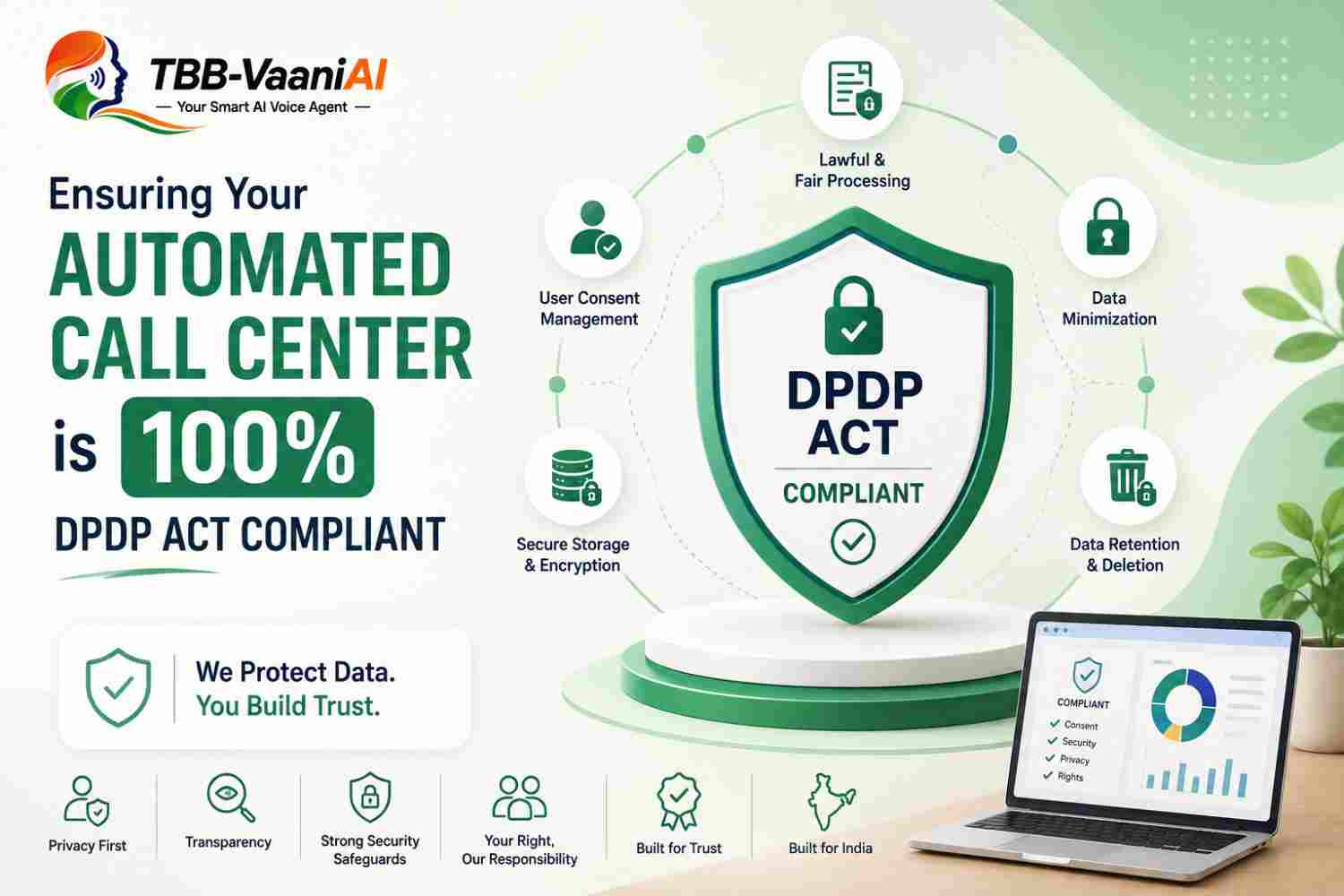
A key aspect of the DPDP Act is obtaining explicit consent from individuals before collecting their data. When setting up an automated call center, it is essential to inform callers about the purpose of data collection and obtain their consent. For example, when a caller dials into your system, you could use VaaniAI’s AI voice agent to explain the purpose of data collection and ask for explicit consent.
Data Storage and Security
Once data is collected, it must be stored securely to prevent unauthorized access. VaaniAI provides robust encryption and secure storage solutions to ensure that customer data remains protected. Additionally, regular audits and compliance checks can help identify and mitigate potential risks.
Data Access and Usage
The DPDP Act also regulates how data can be accessed and used. Businesses must clearly define who can access the data and for what purposes. Implementing role-based access control within your automated call center can help manage this effectively. With VaaniAI, you can set up specific roles and permissions to ensure that only authorized personnel have access to sensitive information.
Practical Tips for Compliance
To ensure full compliance with the DPDP Act, consider the following practical steps:
- Data Minimization: Collect only the minimum amount of data necessary for the intended purpose.
- Transparency: Clearly communicate to customers why their data is being collected and how it will be used.
- Regular Audits: Conduct regular compliance audits to identify and address any gaps.
- Training: Train your staff on the importance of data protection and the specific requirements of the DPDP Act.
VaaniAI: A Comprehensive Solution
VaaniAI is designed to help Indian SMBs navigate the complexities of data protection while enhancing their automated call center capabilities. By leveraging VaaniAI’s advanced AI voice agents, businesses can ensure that they are collecting and handling data in compliance with the DPDP Act. Our solutions include:
- Explicit consent mechanisms
- Secure data storage and encryption
- Role-based access control
- Ongoing compliance support and training
Conclusion
Complying with the DPDP Act is not just a legal requirement; it is essential for building trust with your customers. By implementing the tips discussed and utilizing solutions like VaaniAI, you can ensure that your automated call center is fully compliant. This not only protects your business from legal risks but also enhances your reputation as a responsible and trustworthy entity.
Contact us today to learn more about how VaaniAI can help your business stay compliant and thrive in the digital landscape.