Introduction
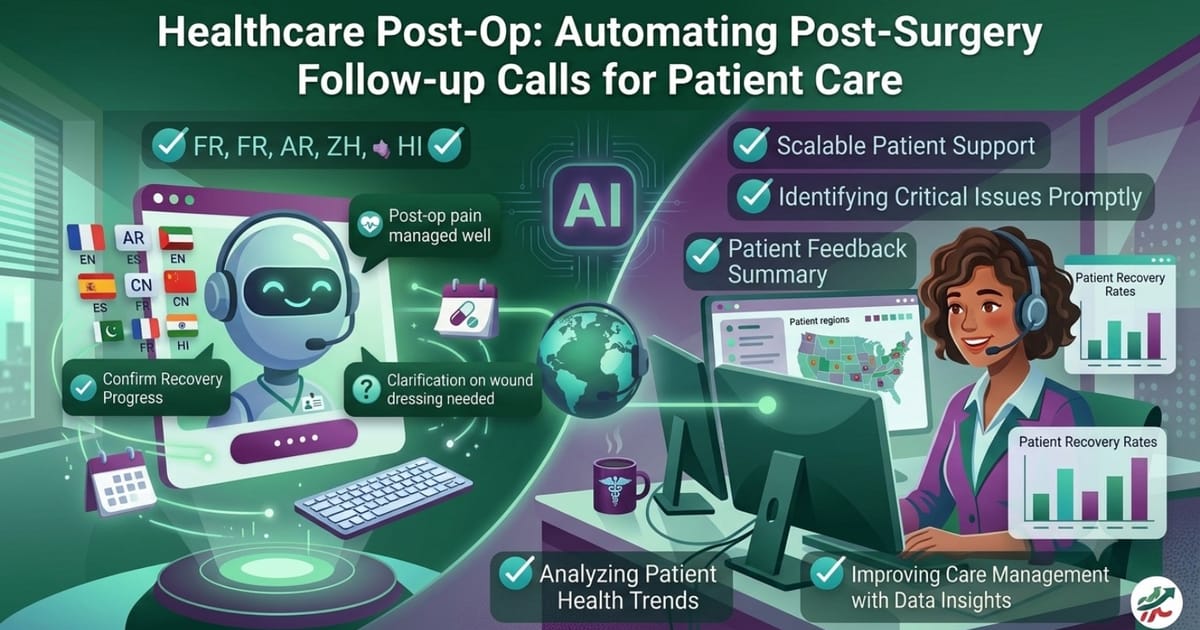
The healthcare sector in India is witnessing a significant transformation with the integration of advanced technologies such as artificial intelligence (AI). One area that has seen substantial improvements is the post-operative care process, particularly through the use of automated follow-up calls. This article explores how AI voice agents, like those provided by VaaniAI, can revolutionize post-surgery follow-up calls, ensuring better patient care and operational efficiency.
The Importance of Post-Surgery Follow-Up Calls
Post-operative follow-up calls are crucial for several reasons:
- Monitoring Recovery: Ensuring patients are recovering as expected.
- Detecting Complications Early: Promptly identifying any issues that may arise.
- Building Trust: Providing reassurance and support to patients during their recovery phase.
Challenges in Traditional Follow-Up Methods
Traditional methods of conducting post-surgery follow-up calls often involve manual processes, which can be time-consuming and prone to errors. Additionally, healthcare providers might struggle with limited resources and high patient volumes, leading to delays or missed follow-ups.
How AI Voice Agents Can Help
A solution to these challenges lies in the use of AI voice agents, which can automate the entire process of post-surgery follow-up calls. Here’s how they work:
Automated Call Scheduling
VaaniAI enables the scheduling of automated follow-up calls based on specific timelines after surgery. These calls can be customized to match the patient's recovery milestones, ensuring timely check-ins without the need for manual intervention.
Interactive Voice Response (IVR)
When a patient receives an automated call, they can interact with the system using IVR technology. Patients can answer questions about their health status, report any symptoms, or request further assistance. This interaction ensures that the patient's needs are met promptly.
Data Collection and Analysis
The data collected from these automated calls can be analyzed to identify trends, potential issues, and areas for improvement. This data-driven approach helps healthcare providers make informed decisions and tailor their services accordingly.
Practical Tips for Implementing AI Voice Agents
1. Identify Key Metrics
Determine what you want to achieve with the automated follow-up calls. Common metrics include patient satisfaction, reduction in complications, and operational efficiency.
2. Customize Your Call Scripts
Create call scripts that are clear, concise, and tailored to your patients' needs. Ensure that the script includes all necessary information and prompts for patient interaction.
3. Test and Iterate
Pilot the system with a small group of patients first. Gather feedback and make necessary adjustments before rolling it out to a larger audience.
Case Study: VaaniAI in Action
Consider a hospital that implemented VaaniAI for post-surgery follow-up calls. They were able to reduce the number of missed follow-ups from 20% to less than 5%. Additionally, patient satisfaction scores improved by 15%, and the hospital was able to reallocate staff to more critical tasks.
Conclusion
Automating post-surgery follow-up calls with AI voice agents like VaaniAI can significantly enhance patient care while improving operational efficiency. By leveraging this technology, Indian SMBs in the healthcare sector can ensure that their patients receive the attention and support they need during their recovery period.
Call to Action
If you're interested in transforming your post-surgery follow-up process with cutting-edge AI voice agents, contact VaaniAI today to learn more about our solutions and how we can help your healthcare business thrive.